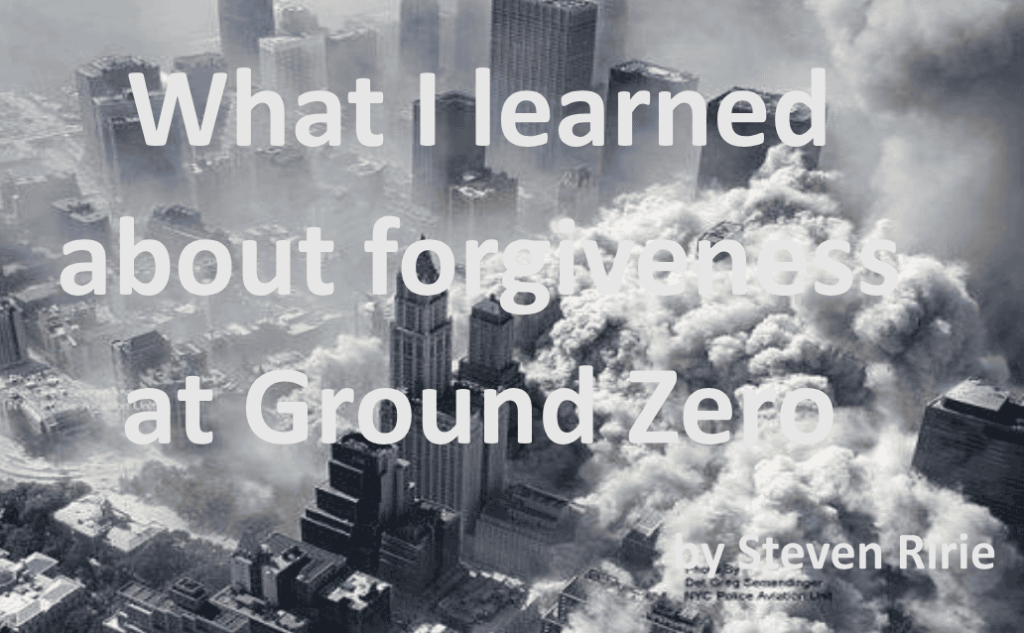
When the World Trade Towers collapsed on September 11, 2001, 2,997 innocent people tragically lost their lives.
Days after, just as commercial aircraft once again began to fly, I received a call to attend the funeral of Terence (Terry) Hatton. Captain of New York City Fire Department Rescue Company 1, Terry was described as the “ultimate firefighter.” New York City Mayor Rudy Giuliani once joked, “I think we ran out of medals.” On that fatal autumn day, as Terry led ten members of the company up the stairs of the North Tower, the building gave way, collapsing at 10:28 a.m.
Twenty-two days later, I flew to New York City on a nearly empty airplane. Having never been to the Big Apple, I was struck by the sadness in the eyes of those on the streets. Images of the missing were posted on buildings, store windows, and street lamps—the haunting faces peering at me from nearly every corner. The atmosphere was glum, and an almost palpable weight hung over the city. The New York Police Department had barricaded Ground Zero blocks from the Trade Center site. After all, it was a crime scene.
On the morning of October 5, we met at Rescue 1’s headquarters, where we boarded an FDNY van headed to Ground Zero. All along the way, people lined the streets, holding signs thanking the NYPD and the FDNY for their sacrifices. It was humbling to see, and being with Terry’s family added to the solemnity as we passed several roadblocks. Father Richard Czajkowski, a Catholic priest and friend of the Hatton family for over sixty years, sat in front of me. We were introduced, but other than that, I don’t recall him saying much on the drive, but we were all mostly quiet. Maybe “pensive” is a better description.
Terry’s friend who drove the van, a surviving firefighter from Rescue 1, related the story of that dreadful day. One thing he said I will never forget. “That morning, Terry ordered me to stay back, to stay with the engine. I wanted to go in with the rest, but he ordered me to stay out.” As he spoke of what happened, we all understood that he wouldn’t be with us had Terry not given him the order that saved his life.
Hours later, Captain Hatton and many others in their company were gone. As I listened, I sensed our destination had become sacred ground. We parked about a block away, where a number of cars layered with five to six inches of ash quietly waited for someone to drive them away. I asked Terry’s friend if the owners would be allowed to reclaim their vehicles.
He stared at me blankly. “There may be no one to claim them.”
My mind rolled over what that meant.
As we walked toward the massive pile of debris, formerly giant and luxurious buildings, the stench of death and devastation enveloped me. To say it was traumatizing is to minimize the experience. The destruction was too difficult to wrap my head around, yet it was real, and here I stood in the middle of it. As I envisioned the faces on the scores of missing-persons posters, my heart ached for the families left behind. I felt deep anguish for the senseless loss of innocent lives. And for what? Angered, all I could think about was how the nineteen terrorists deserved to suffer.
As we neared the remains of the North Tower where Terry’s body had been discovered in a stairwell, we formed a circle to offer a prayer. All around us, FDNY firefighters still battled the fire raging below, the effort to clean up the site having begun just days earlier. Some firefighters joined us as we gathered, standing just outside our small circle. We all bowed our heads, and Father Czajkowski prayed. I don’t recall much of what he said, but these words I will never forget: “We ask thee to forgive the men responsible, the men who did this.”
I didn’t want forgiveness, not for these men, these terrorists. No, I wanted justice. I didn’t want the firefighters who’d joined us hearing anything but a petition for God’s retribution, not His mercy. The terrorists did not deserve mercy!
After the amen, we visited for a while, and then, as we began to leave, I hurried over to Father Czajkowski to express my feelings about how mercy shouldn’t rob justice. As we walked together, I said, “Respectfully, I’m not Catholic, but I am Christian, and I believe in forgiveness.” He didn’t say anything that I remember, but I could tell he was listening, so I continued. “Forgive me,” I said, “but isn’t this a time to pray for justice for those murdered? They were all innocent. I don’t have mercy in my heart for terrorists. Am I wrong?”
I’d gone several steps before I noticed the priest had stopped and now waited several steps behind me. I paused and turned toward him. Suddenly, he closed the gap, stopping directly before me. He then asked a question that struck me. “Can you name one of God’s children that needs His mercy more than the men responsible for this do now?”
Instantly, the air left my lungs, and my eyes teared up. It was then I noticed the tears in his eyes. For a moment, we stood there, unmoving and silent, until he finally motioned for us to go. We walked the rest of the way in silence.
On the near-empty flight back to Las Vegas, under the darkness of night and the humming of the engines, I contemplated the meaning of my experience. I had come to understand more fully that judgment was not mine but God’s. I wanted to be a man who could pray for mercy, even when my heart cried out for something altogether different. I wondered if prayers for Heavenly Father’s forgiveness to be extended to others brought heaven’s mercy for me. Something in the darkness, flying high above the world, told me it did.